
Warehouse technology
Our own warehouse system. Problems caught early.
We built our own warehouse management system around the way our warehouses work. It runs every step from the delivery at the door to proof of delivery, watches for problems before they reach your customers, and holds the records your reporting comes from. Which parts apply at the location holding your stock, and how your reporting reaches you, is confirmed at onboarding.
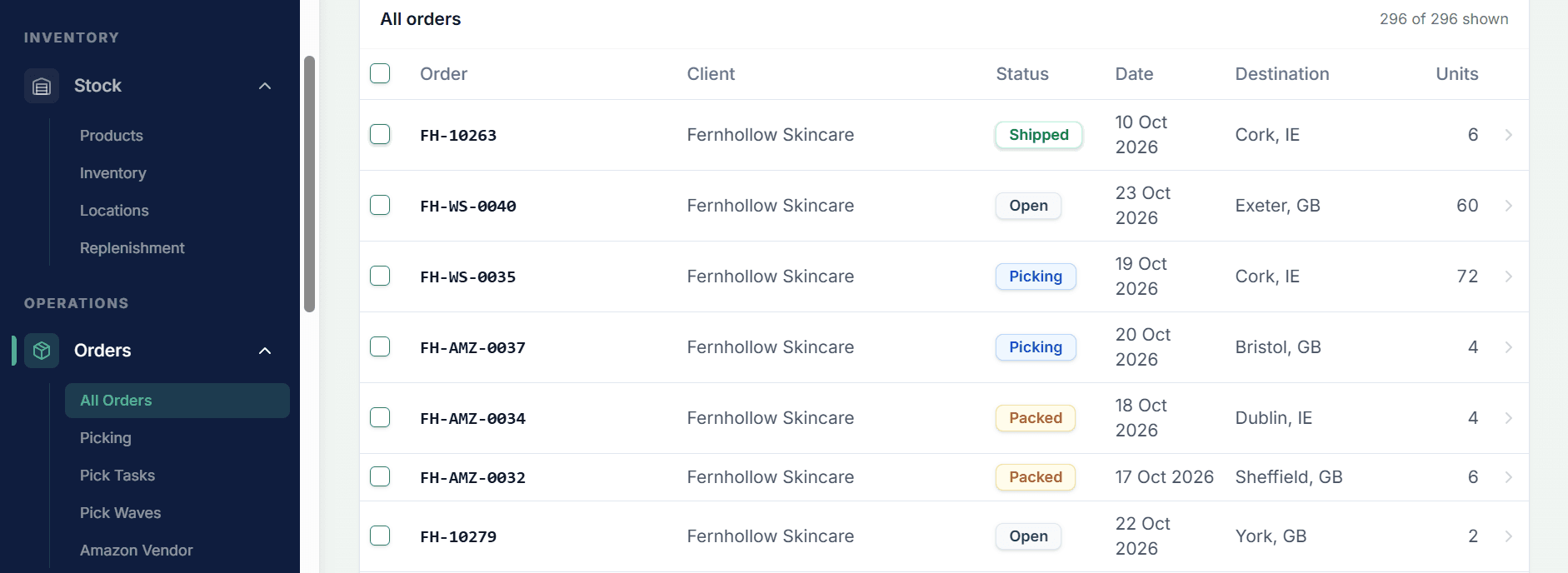
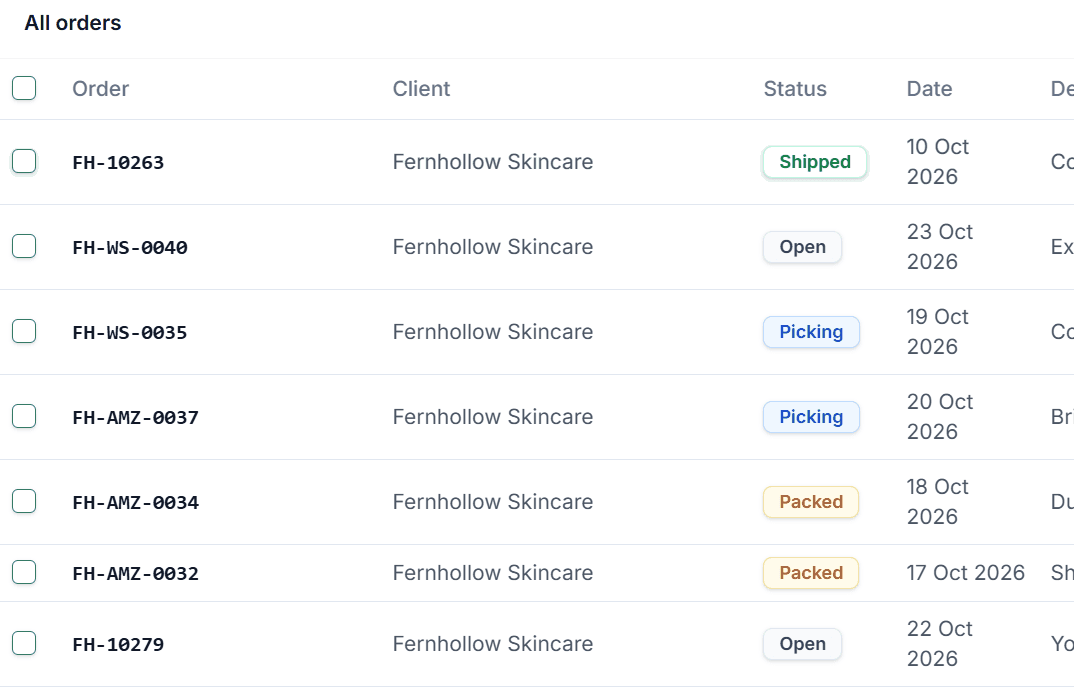
Screens from our warehouse system. Sample data for a fictional brand, not a customer.
What the system covers
Six parts, one record.
The system fits the way a fulfilment warehouse works: many customers, many channels, and stock that has to be right every time. These are the parts your fulfilment runs on.
Charges come from recorded work. Your agreed rates, storage pricing and add-on services feed the invoice, so every line on your bill traces back to a task the system recorded. How pricing works
One record, from the floor to your report. The system runs on the warehouse team’s handhelds and phones, so the record the picker works from is the record you receive. It is our own system, and we keep adding to it.
Problems caught early
- The system’s command centre watches for exceptions: an order stuck in picking, a delivery that has not arrived, stock that does not match the record.
- Each exception gets an owner, the evidence and a record of how it was put right.
- Dispatch targets are tracked against the clock, not assumed.
- Pallet positions are counted by warehouse, so we know what space is free before your stock arrives.
Stock
- Every product with its code, barcode, packed size and, where it applies, the kit or bundle it belongs to.
- Stock by location, down to the bin, with pick faces (the shelf slots orders are picked from) topped up before they run empty.
- Batches and lots, so dated or traceable stock is picked in the right order.
- Purchase orders and expected deliveries alongside the stock they will top up.
Goods in
- A notice for every delivery before it arrives, then each one received against what was booked.
- Each item’s shelf location recorded as it is put away, so stock can be found from the moment it lands.
- Stock coming back from Amazon checked in the same way.
Orders and picking
- Orders from every channel in one list, each with a live status from open to shipped.
- Pick waves that group orders into one pass through the warehouse, with barcode checks at the pick.
- Trade, retail and Amazon vendor orders prepared to their own rules.
- Single-item orders on a faster route through packing.
Dispatch
- A dispatch queue sorted by carrier and reconciled against each collection, with a recorded handover.
- Pallet labels with SSCC numbers (the serial shipping container codes some retailers require).
- Proof of delivery kept with the order.
Returns and rework
- Returns checked against your instructions, then restocked or set aside for rework.
- What happened to each returned item is recorded, so the stock count stays right.
Reporting
Stock and order information for your team.
Know your stock
Stock by location, with batches and lots where they apply, sent to you in the format agreed during onboarding so you can plan your next delivery in.
Order and dispatch updates
Each order’s status from open to shipped, the recorded carrier handover and the proof of delivery kept with the order, shared the way your team needs it.
Agree your reporting
What it covers, how often it arrives and who to contact, settled before any stock moves.
Inside the system
What our team works from, every day.
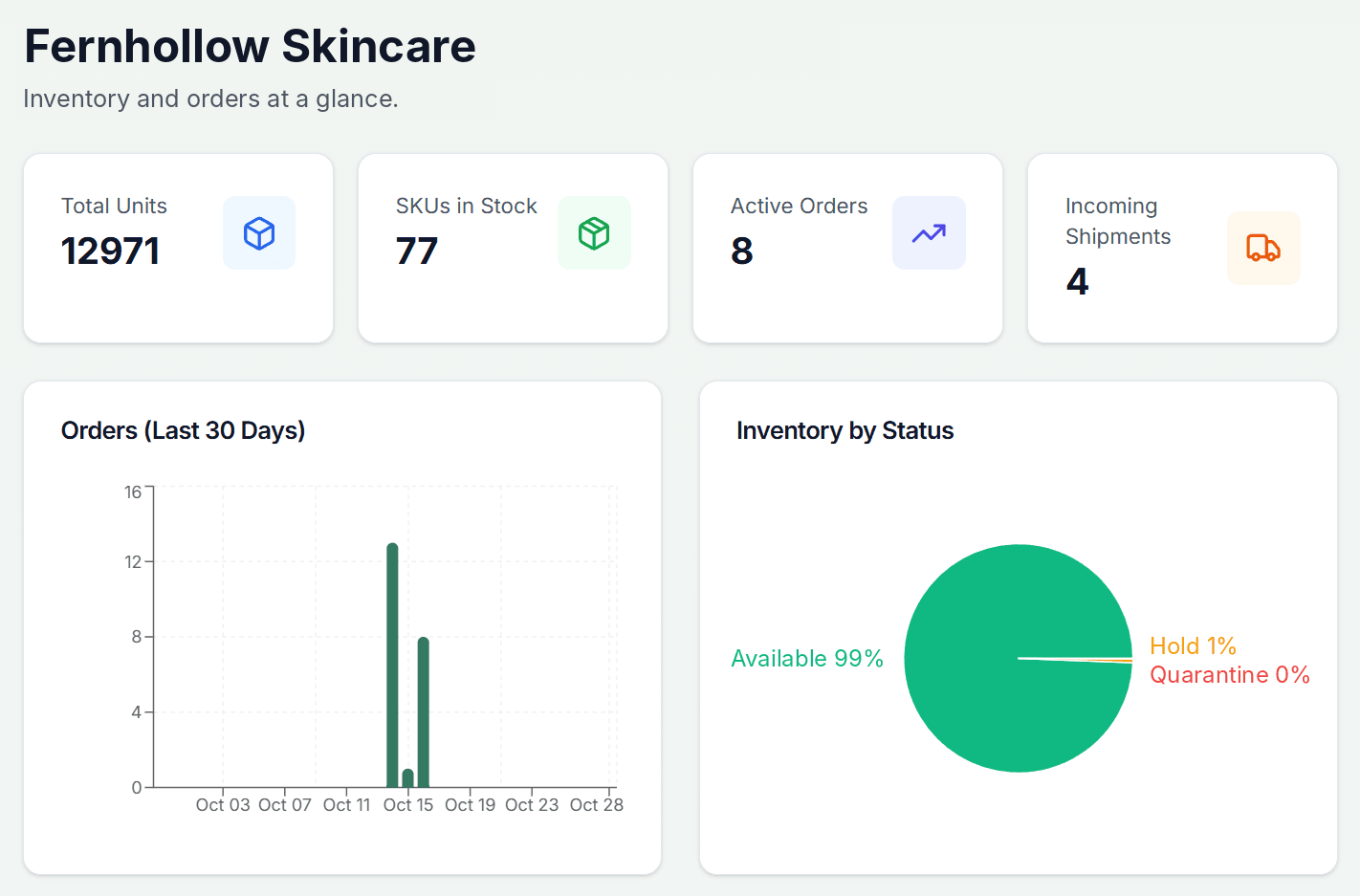
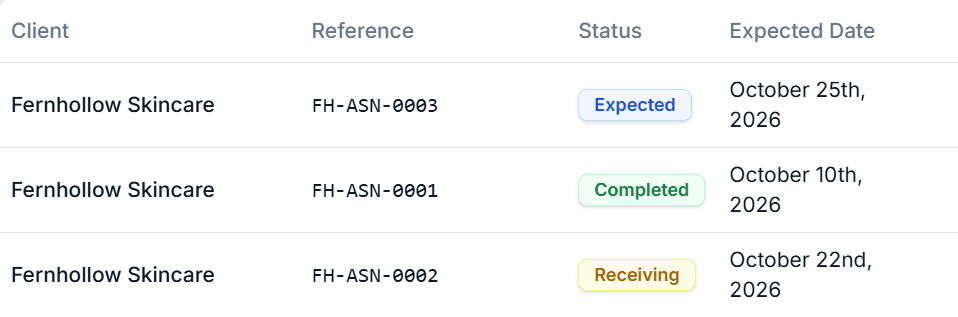
These are screens from the warehouse system our team works from: the same records used to receive deliveries, pick orders and book dispatch. Your reporting is drawn from the same records. The data shown is sample data for a fictional brand, not a customer.
Stock and orders overview
One screen per brand: units and products in stock, orders in progress, deliveries on the way, orders over the last 30 days and how much stock is available to sell, all drawn from the same records the warehouse works from.
Goods in
The deliveries you have booked in, the date each one is due, and whether it is still expected, being received or complete.
Product records
One line per product with its code and barcode, so the right item goes into every parcel and the stock count matches what is on the shelf.
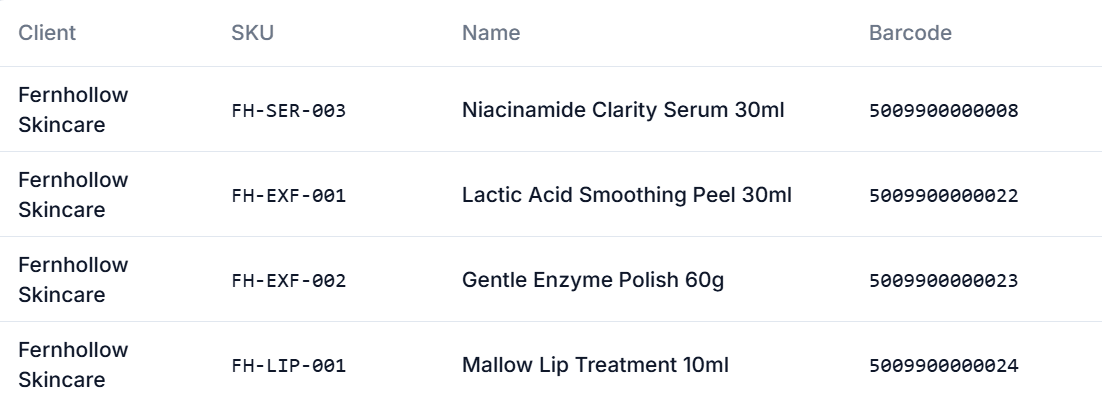
Screens from our warehouse system. Sample data for a fictional brand, not a customer.
Your setup
Agree the setup before the stock moves.
Your selling channels, product data and reporting needs shape the setup. Services and system connections are confirmed for the warehouse you choose.
How sales channel connections work- Selling channels
- Which stores and marketplaces send your orders? We check the connection for your location.
- Product and order data
- Share your product references, variations and packing instructions so we can review what each order needs.
- Returns and exceptions
- Tell us how returned items and problem orders should be handled, so the records match the work done.
- Your point of contact
- For stock held in the UK and Poland, questions go directly to the warehouse team handling it. For stock in the USA, we confirm your point of contact during onboarding.
Let’s plan your fulfilment setup.
Tell us where you need fulfilment, which selling channels you use and what your team needs to know about stock and orders.
Prefer email? hello@warehousebox.net